
Creamy
Creaminess comes from tiny ice crystals, evenly dispersed fat, enough dissolved solids, and a base that does not let water wander freely.
Creamy chemistry, served cold
Ice cream looks carefree in a cone, but every smooth scoop is a tiny frozen ecosystem. Fat carries flavor. Sugar controls softness. Air lightens the bite. Ice crystals decide whether your spoon glides or scrapes.


 Fat
Sugar
Air
Ice
Fat
Sugar
Air
Ice
Ice cream is not just frozen sweet cream. It is a foam, an emulsion, a suspension, and a frozen dessert all at once. That means it has air bubbles, fat droplets, dissolved sugar, proteins, flavor compounds, unfrozen syrup, and ice crystals sharing the same spoonful.
The magic is balance. Too much free water and the scoop turns icy. Too little sugar and it freezes like a brick. Too much air and it tastes thin. Too little air and it can feel heavy. Great ice cream lives in the delicious middle.
The creamy part is visual too: a rich base, a moving churn, and a finished scoop all show what texture science is trying to protect.
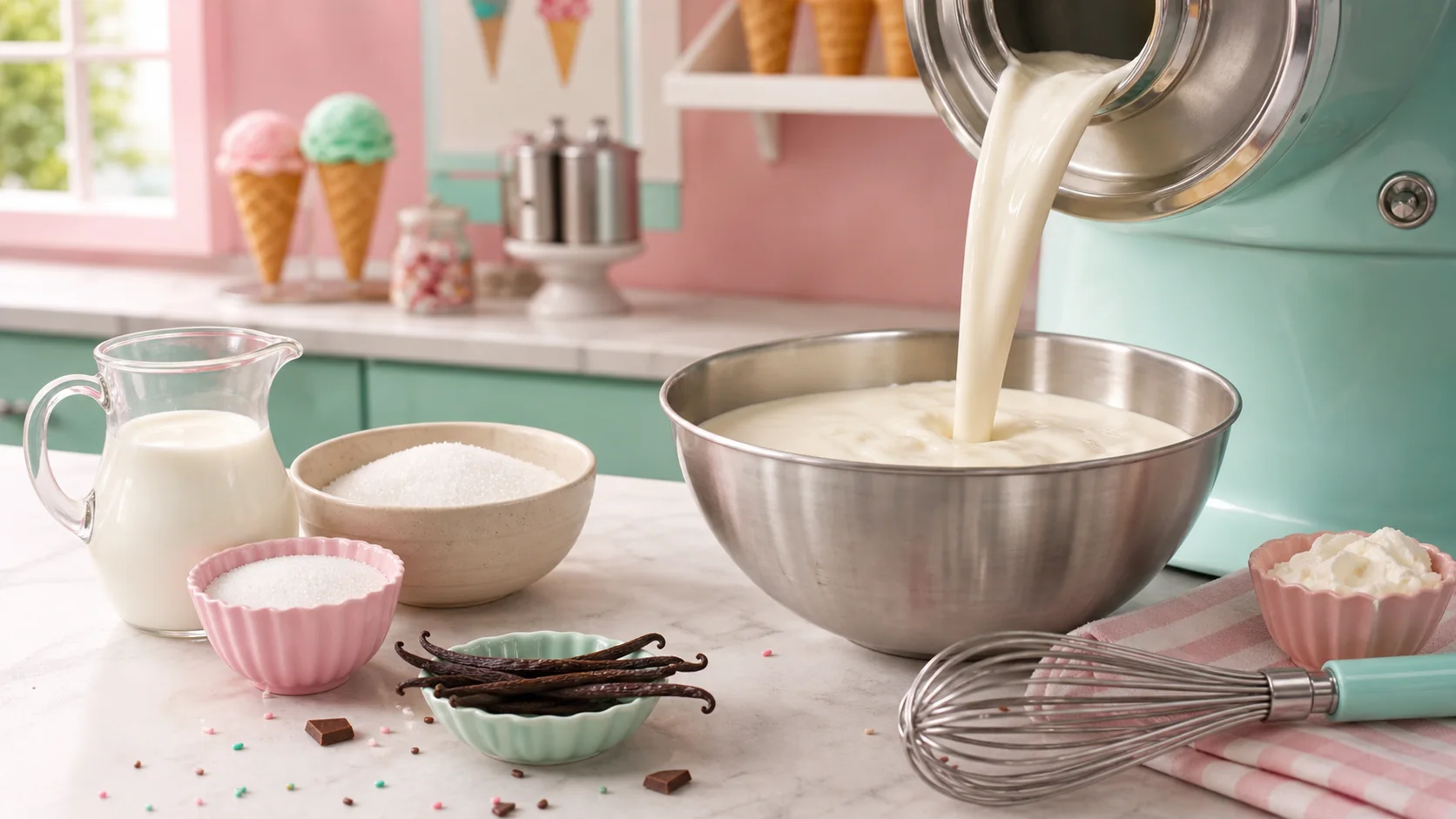
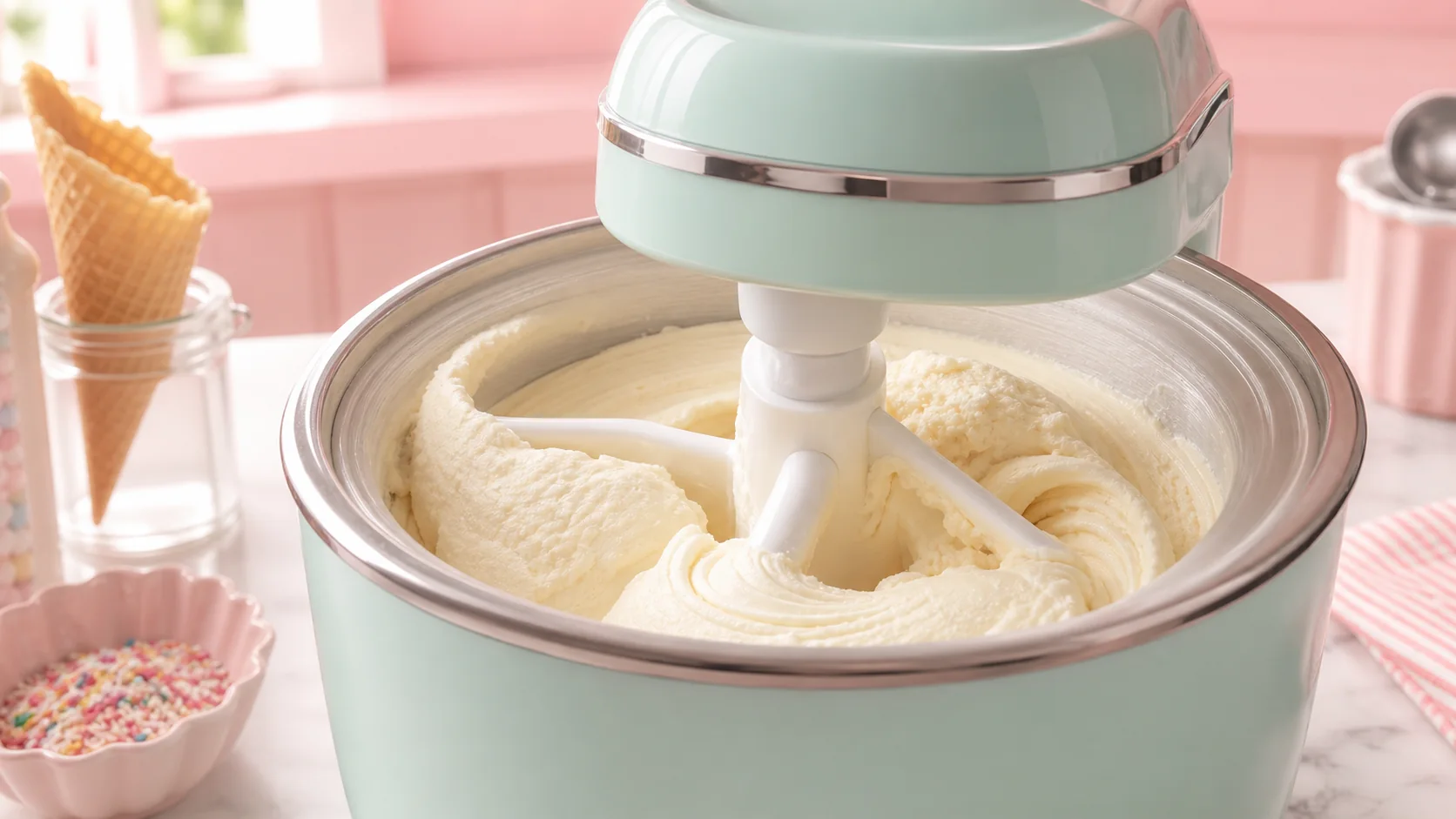
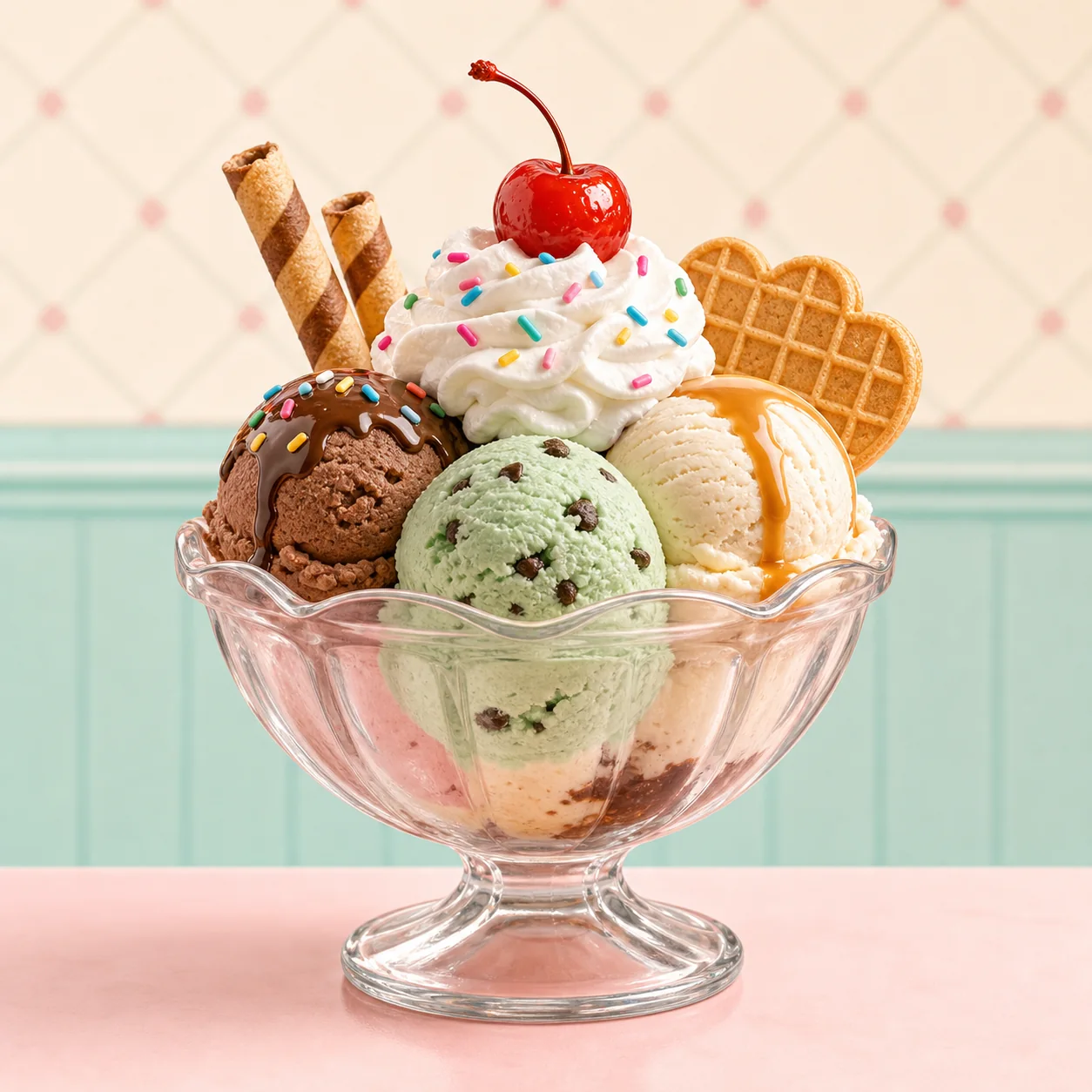
When people say ice cream is creamy, dense, fluffy, icy, gummy, rich, or melt-in-your-mouth, they are describing a set of physical choices.
Creaminess comes from tiny ice crystals, evenly dispersed fat, enough dissolved solids, and a base that does not let water wander freely.
Scoopability depends on sugar, fat, air, freezer temperature, and the amount of syrup that stays unfrozen between ice crystals.
Richness is mostly fat, but it is also aroma and timing. A rich scoop melts slowly enough to coat the tongue and release flavor.
Clean flavors need the right sweetness, a pinch of salt, and a base that lets delicate ingredients like vanilla, fruit, tea, or mint show up.
Lightness comes from air. Churning traps bubbles so the finished dessert is easier to scoop and does not feel like frozen pudding.
Stability is the ability to survive storage without weeping, shrinking, becoming icy, or losing its creamy bite after a few freezer visits.
Every ingredient has a job. Some sweeten, some thicken, some trap air, some carry flavor, and some keep the freezer from turning dessert into a snowbank.

Fat gives ice cream body and helps many flavors linger. Cream, milk, egg yolk, nut butter, coconut cream, and some plant bases all bring fat in different forms.
Fat also affects melt. A well-built fat structure helps the scoop soften gradually instead of collapsing into a puddle immediately.
Sugar does more than make ice cream sweet. Dissolved sugar lowers the freezing point of the water in the base, leaving some syrup unfrozen at freezer temperatures.
That unfrozen syrup is one reason ice cream is scoopable. Less sugar can mean a harder texture; more sugar can make a softer, sweeter dessert.

Milk proteins and lactose-containing solids add body, help bind water, and support a smoother texture. They are not flashy, but they are useful.
Too little structure can taste thin. Too much can feel heavy, chalky, or overly dense depending on the formula.
Custard-style ice cream uses egg yolks for richness, color, flavor, and emulsifying power. Emulsifiers help fat and water live together more peacefully.
Commercial ice creams may use other emulsifiers to improve whipping, melt behavior, and texture consistency.
Stabilizers such as gums, gelatin, or other hydrocolloids can bind water and slow ice crystal growth. Used well, they disappear into the experience.
Used heavily, they can make ice cream feel gummy, stretchy, or oddly resistant to melting.

A small amount of salt can sharpen sweetness and make flavors taste more complete. Cold dulls flavor perception, so ice cream often needs bold seasoning.
Vanilla, cocoa, coffee, fruit, spices, herbs, and nuts all behave differently when chilled and surrounded by fat.
The smaller the ice crystals, the smoother the scoop feels. The larger they grow, the more the dessert crunches, scratches, or tastes watery.
Milk, cream, fruit puree, coffee, and many flavorings all add water. Some water is tied up by sugars, proteins, and stabilizers; some is available to freeze.
Chilling the base before freezing helps it enter the churn cold and orderly, which can encourage smaller crystals and better texture.
As the dasher scrapes frozen mix from the cold wall, constant motion prevents big sheets of ice from forming.
Partial melting and refreezing lets small crystals merge into bigger ones. That is why an abused pint can turn icy even if it started smooth.
Churning does three jobs at once: it freezes the base, scrapes ice crystals into smaller pieces, and whips in air. That air is called overrun.
| Science lever | What it does | What you notice in the scoop |
|---|---|---|
| Low overrun | Less air is added during freezing. | Denser, heavier, more intense bite; too little air can feel hard or pasty. |
| High overrun | More air is added during freezing. | Lighter texture and easier scooping; too much air can taste thin or foamy. |
| Fast freezing | Water turns to ice quickly while the mixture keeps moving. | Smaller crystals, smoother texture, cleaner melt. |
| Slow freezing | Crystals get more time to grow. | Icier texture, especially in home freezers or watery bases. |
| Base viscosity | A thicker base can trap air and slow water movement. | More body and stability, but too much thickness can become gummy. |
Most ice cream flaws are clues. The scoop is telling you what happened to water, fat, air, sugar, or temperature.
Likely causes: too much free water, slow freezing, low sugar, weak stabilizing, or thaw-refreeze cycles.
Try: chill the base well, reduce watery additions, store colder and steadier, and keep the lid tight.
Likely causes: low sugar, low fat, very cold freezer, too little air, or a formula with too much frozen water.
Try: temper briefly before scooping, adjust sweetener balance, or use a richer base.
Likely causes: too much sugar or alcohol, not enough freezing time, warm freezer, or under-churning.
Try: harden longer, check freezer temperature, and use boozy mix-ins with restraint.
Likely causes: too much stabilizer, over-reduced base, excessive gums, or a thickener mismatch.
Try: lighten the stabilizer, simplify the formula, and let the flavor lead instead of the texture system.
Likely causes: large ice crystals, lactose crystallization, poorly dissolved ingredients, or mishandled chocolate.
Try: dissolve solids fully, strain custards, chill before churning, and avoid repeated warming.
Likely causes: cold muting aroma, too little salt, diluted base, stale ingredients, or flavors trapped by too much fat.
Try: season boldly, add a small pinch of salt, steep aromatics longer, and taste the base cold before churning.
You do not need a food science degree to learn from a pint. A few playful experiments can make the science obvious.
Taste the same flavor straight from the freezer, after 5 minutes, and after 10 minutes. Notice how aroma and sweetness bloom as it softens.
Compare a newly opened pint with one that has been opened many times. Look for icy edges, graininess, shrinkage, or freezer-burn flavors.
Compare a rich dairy scoop, a fruit sorbet, and a plant-based scoop. Notice melt speed, flavor release, and how long the texture coats the tongue.
Compare a dense gelato-style dessert with a lighter ice cream. Let both soften slightly, then compare weight, scoop feel, and melt behavior.

Cold slows aroma. Since much of flavor comes from smell, frozen desserts often need more assertive seasoning than room-temperature desserts. That is why vanilla needs to be fragrant, chocolate needs enough cocoa depth, fruit needs brightness, and caramel often benefits from a tiny salty edge.
Fat also changes flavor. Some aromatic compounds dissolve beautifully in fat, giving flavors like vanilla, coffee, chocolate, nut, and butter time to linger. But fat can soften acidity and mute delicate fruit, so fruit-forward ice creams often need careful sweetness and a bright note such as lemon.
Texture changes flavor too. A smooth scoop melts evenly across the tongue. An icy scoop melts unevenly, releasing watery pockets and making flavors seem scattered. In ice cream, deliciousness is not only what you add. It is how the frozen structure delivers it.
Warm air, partial melting, loose lids, and repeated freezer trips can let small ice crystals grow into larger ones. Store ice cream tightly sealed and away from the freezer door.
Creaminess comes from a balanced formula, small ice crystals, enough dissolved solids, well-managed water, proper churning, and steady cold storage.
Common reasons include low sugar, low fat, too little air, too much frozen water, or a very cold freezer. Letting it temper briefly before scooping can help.
Not automatically. Stabilizers are tools. Used carefully, they can protect texture and reduce iciness. Used excessively, they can make ice cream feel gummy or artificial.
Gelato is often served slightly warmer and can be churned with less air, which can make it feel denser and make flavors seem more direct.
Alcohol lowers freezing point, so even small amounts can soften texture. Too much can keep a base from freezing firmly.
Follow the process from base to churned, hardened scoop.
Learn what milk, cream, sugar, eggs, stabilizers, and mix-ins do.
Protect texture after you bring ice cream home.
A guide to ice cream, gelato, custard, sorbet, kulfi, and more.
Compare common ingredients, texture, air, and serving style.
Equipment, bases, chilling, churning, mix-ins, and troubleshooting.
How plant bases behave and why texture planning matters.
Definitions for overrun, stabilizer, emulsion, hardening, and more.
Science-friendly trivia for curious ice cream lovers.