
Ideal freezer temperature range
Keep ice cream in a consistently cold freezer and follow your freezer or food-safety guidance.
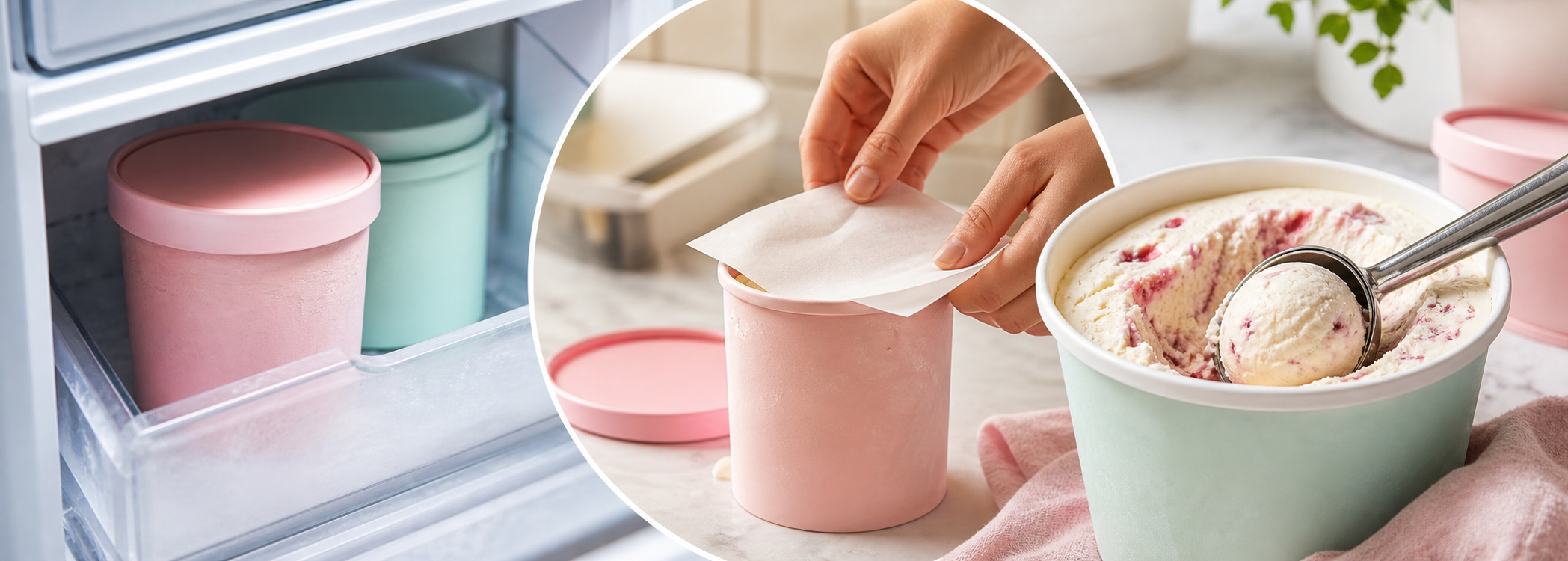
Storage affects texture as much as flavor. Small habits can help keep a container fresher after it leaves the shop or freezer aisle.
Keep ice cream in a consistently cold freezer and follow your freezer or food-safety guidance.
Air exposure and temperature changes can dry the surface and create icy textures.
A snug lid helps reduce air exposure.
The back usually sees fewer temperature swings than the door.
Softening and refreezing can create larger ice crystals.
Shallow storage can help homemade batches freeze more evenly.
A short rest can protect texture and make scooping easier.
Refrozen ice cream may taste fine but feel icier or grainier.
Learn why temperature changes texture.
Store homemade batches with care.
See where hardening and storage fit the process.
How frozen desserts evolved through culture and technology.
A guide to ice cream, gelato, custard, sorbet, kulfi, and more.
Compare common ingredients, texture, air, and serving style.
A complete step-by-step guide to ice cream base, chilling, churning, mix-ins, hardening, storage, and serving.
Classic flavors, unusual ideas, seasonal scoops, and pairings.
A respectful look at less common regional and modern flavors.