
The creamy backstage tour
How Ice Cream Is Made
Ice cream looks like magic because the best version hides the work. Behind every smooth scoop is a clever chain of ingredients, heat, chill, motion, air, freezing, and patience.
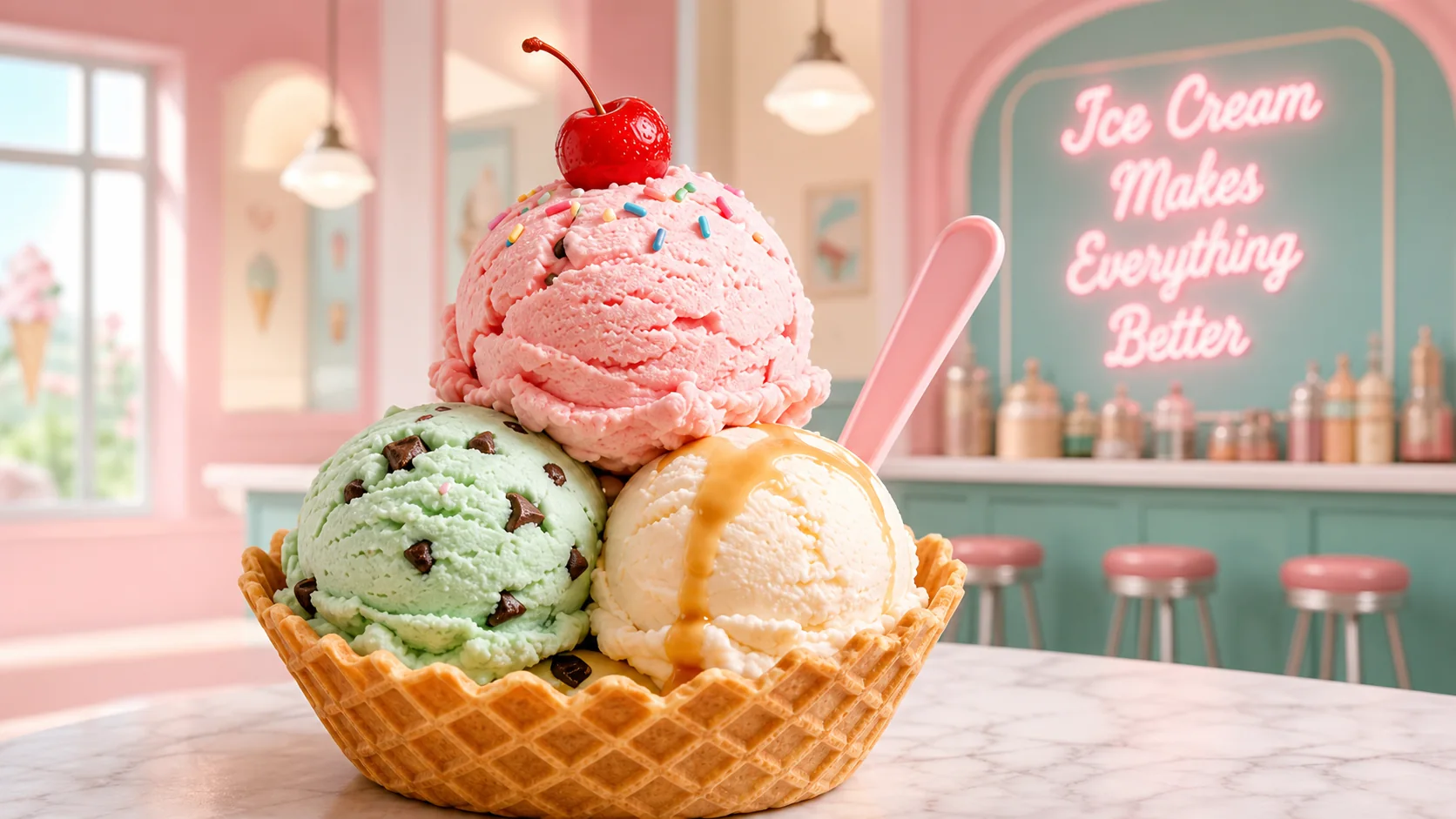
From Liquid to Scoopable Joy
At its simplest, ice cream begins as a flavored liquid base. The base is balanced so it can freeze without turning into a solid block, churn without becoming icy, and melt in your mouth instead of crunching like a snowbank.
Commercial makers and home cooks use different equipment, but the story is surprisingly similar: build a good base, make it cold, freeze it with motion, fold in the fun stuff, then harden and store it like texture matters.
Choose Your Scoop Route
A Quick Visual Tour
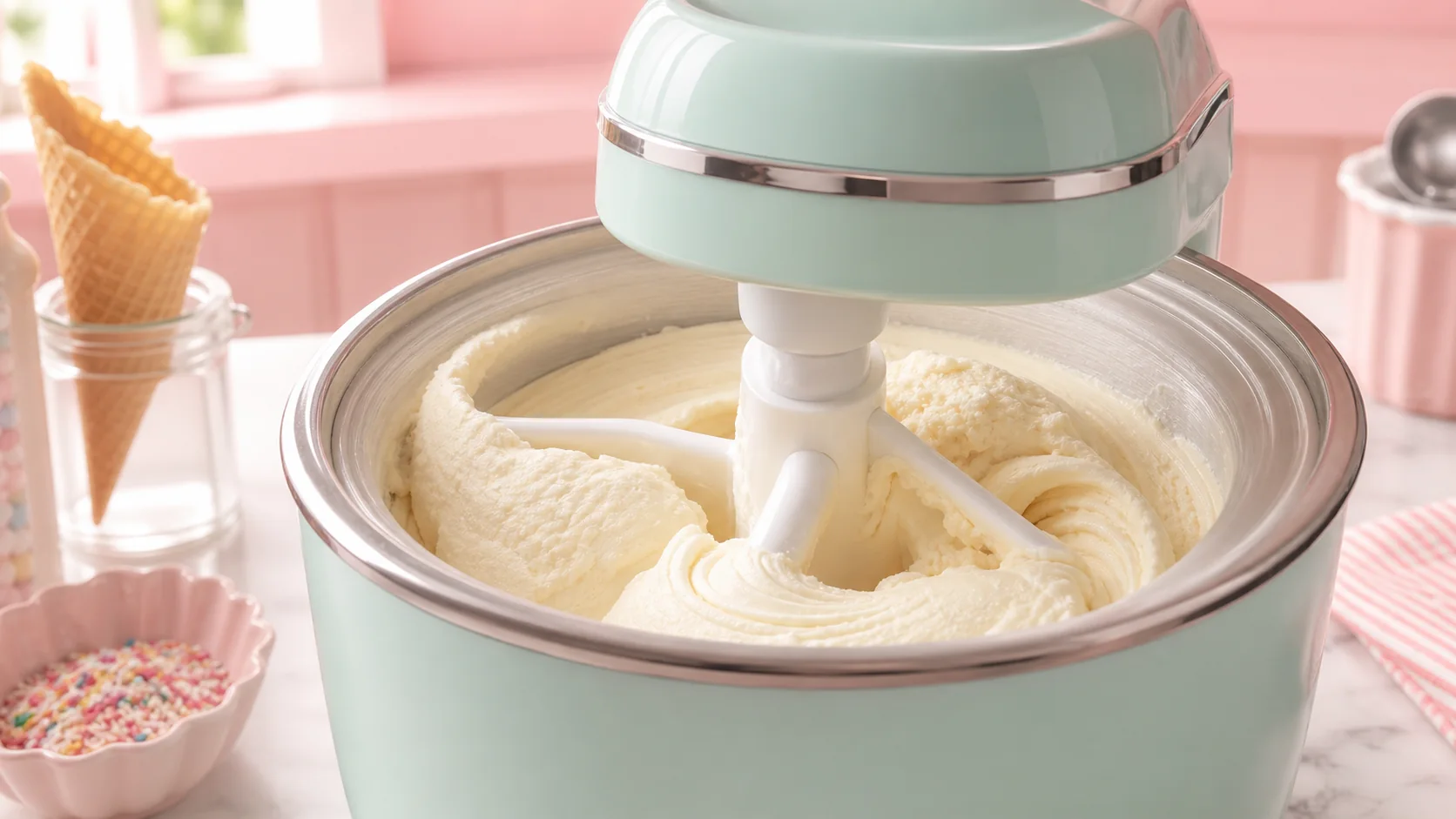
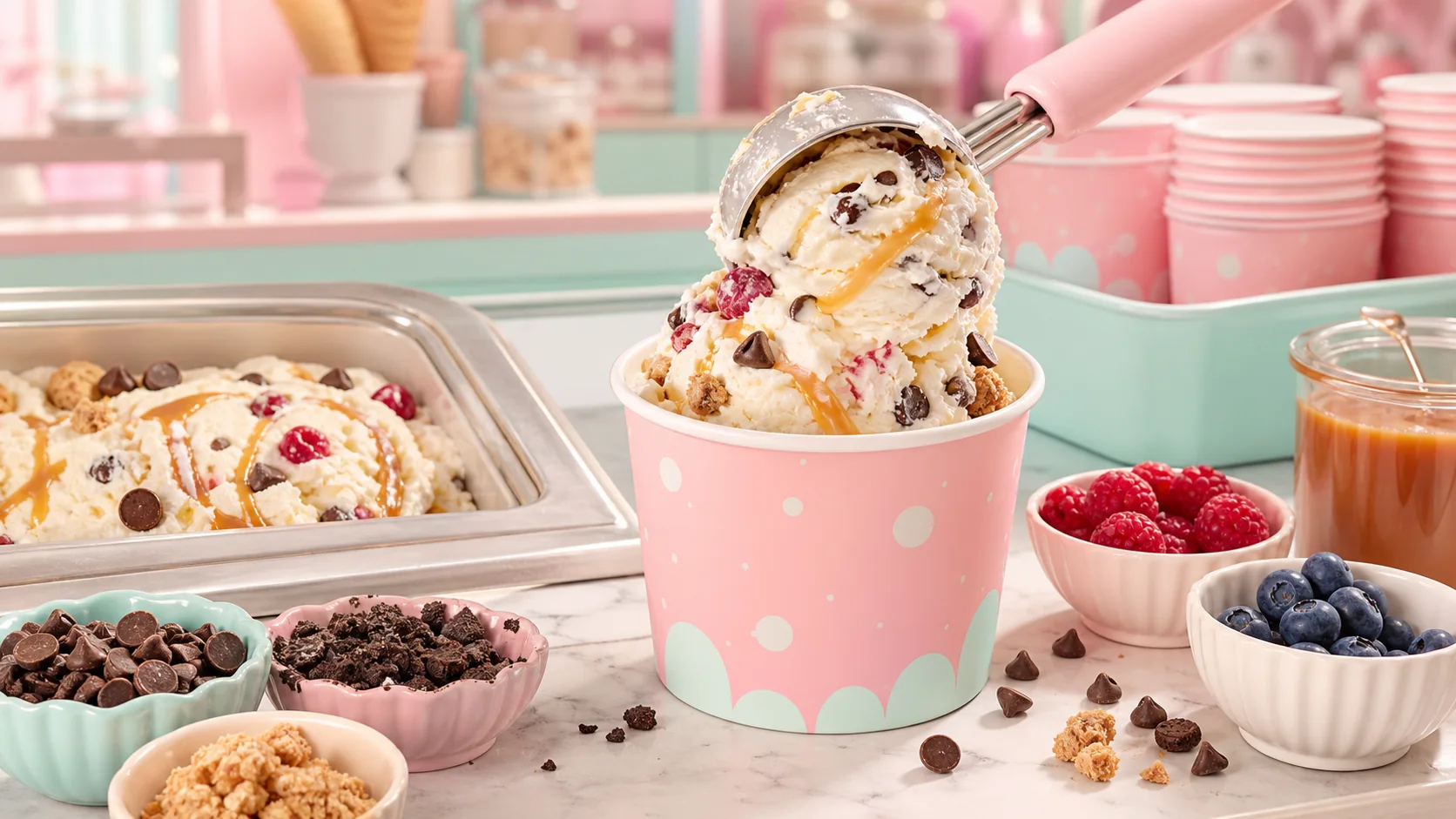
Before the deep dive, here are the three big transformations: liquid base, moving freezer, finished scoop.
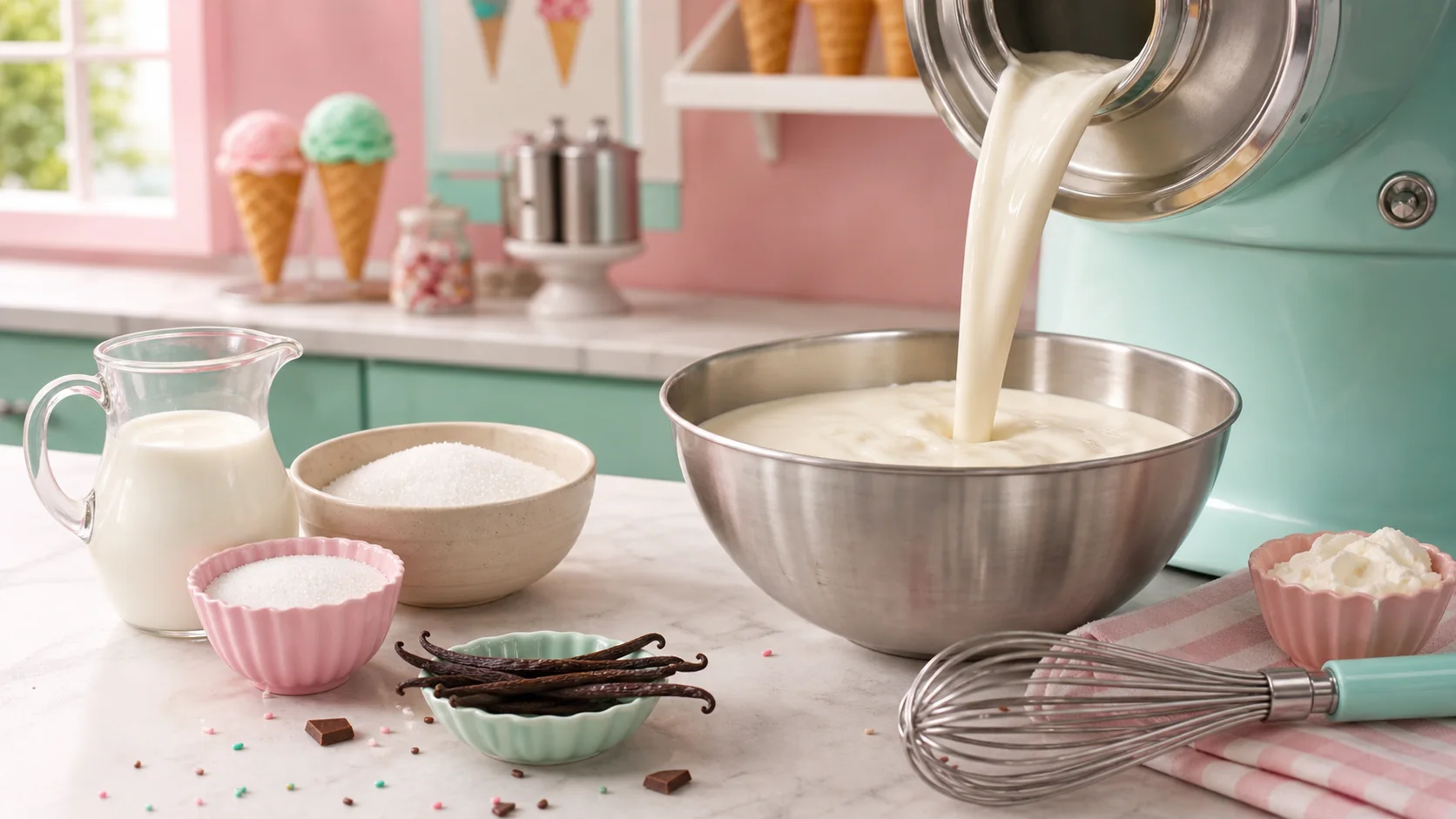
The Ingredients: Everyone Has a Job
A great scoop is not just cold milk with optimism. Each ingredient changes flavor, texture, melting, and how the dessert behaves in the freezer.
Dairy or Plant Base
Milk, cream, coconut, oat, cashew, soy, or another base supplies water, solids, body, and the main flavor backdrop. Higher richness can make the scoop feel fuller, but balance matters more than brute force.
Sweeteners
Sugar does more than sweeten. It affects how firmly the base freezes, how easily it scoops, and how flavor blooms on your tongue. Too little can turn ice cream stubbornly hard; too much can make it overly soft.
Flavor
Vanilla, cocoa, fruit, coffee, nuts, mint, spices, caramel, tea, and cookies all behave differently in cold cream. Cold dulls flavor, so ice cream bases often need bolder seasoning than room-temperature desserts.
Body Builders
Egg yolks, milk solids, stabilizers, emulsifiers, nut pastes, or starches can help create structure. They keep water, fat, and flavor working together so the scoop feels smooth instead of icy or thin.
How Ice Cream Is Made, Step by Step
Here is the full journey from raw idea to "wait, who finished the pint?"
-
01
Design the Base
The maker chooses a style: Philadelphia-style dairy, custard, gelato-like, soft serve, sorbet, sherbet, or dairy-free. This decision sets the texture target before anything touches a mixer.
A balanced formula considers water, fat, sugar, solids, flavor intensity, and any stabilizing ingredients. That balance is why one recipe scoops neatly and another freezes like a brick with a dream.
-
02
Measure and Mix
Liquids, sweeteners, powders, flavorings, and fats are measured and blended until the base is even. Powders need time and movement to hydrate; fats need help dispersing; sugar needs to dissolve.
For chocolate, coffee, caramel, and nut flavors, this stage often builds the personality of the scoop. For fruit flavors, the maker also thinks about acidity, water content, pulp, seeds, and color.
-
03
Heat, Pasteurize, or Cook When Needed
Many commercial dairy bases are pasteurized as part of a controlled food-safety process. Custard-style bases are heated so egg yolks can thicken the mixture and add that rounded, silky character.
Heating can also help dissolve sugars, hydrate dry ingredients, bloom cocoa, draw flavor from spices, and create a more uniform base. The trick is control: enough heat to do the job, not so much that delicate flavors taste tired.
-
04
Homogenize for Smoothness
In many larger-scale processes, homogenization breaks fat into smaller droplets so it distributes more evenly. That can help the finished ice cream taste smoother and more consistent from spoonful to spoonful.
Home cooks do a softer version of this with blending, whisking, straining, and patience. It is less dramatic, but the goal is similar: fewer lumps, fewer surprises, better texture.
-
05
Chill and Age the Base
The base rests in the refrigerator before churning. This pause lets ingredients hydrate, fat crystallize slightly, bubbles settle, and flavors become more cohesive.
A cold base also churns more efficiently. If the base enters the machine warm, the freezer bowl or batch freezer has to spend energy cooling the mixture before it can build texture.
-
06
Churn While Freezing
This is the big transformation. The machine chills the base while a dasher scrapes, stirs, and folds. Ice crystals begin forming, but movement keeps them small. Air joins the party, but ideally in a controlled way.
The result is soft, fresh ice cream. It is creamy but not fully hardened yet, which is exactly why this is the perfect moment for many pieces, ribbons, and swirls.
-
07
Add Mix-ins and Ripples
Cookies, brownie bits, chocolate chips, nuts, candy, jam, caramel, fudge, marshmallow, and fruit are usually added near the end of churning or layered during packing.
Timing matters. Add delicate pieces too early and they can break down. Add thick ribbons carelessly and they vanish into the base instead of becoming glorious spoon-hunting treasure.
-
08
Package and Harden
Freshly churned ice cream is soft, so it is packed into containers and moved to a colder freezer to harden. Fast hardening helps protect the small-crystal texture built during churning.
This is also when layers become visible, swirls settle into ribbons, and the scoop gains enough structure to hold its shape in a cone.
-
09
Store, Scoop, and Serve
Ice cream stays happiest with steady cold, tight lids, and minimal thaw-refreeze drama. Once it softens and refreezes repeatedly, ice crystals can grow and the texture can turn grainy.
For serving, a brief tempering rest often makes scooping easier and flavor more expressive. Not melted, not rock-hard: just relaxed enough to be polite.
Commercial Ice Cream vs. Homemade Ice Cream
Same dessert family, different tools. The factory has precision and speed; the home kitchen has flexibility and the immediate joy of licking the spatula.
| Stage | Commercial process | Home kitchen process |
|---|---|---|
| Formula | Designed for repeatable texture, packaging, distribution, storage, and consistent flavor. | Designed for small batches, personal taste, available equipment, and quick enjoyment. |
| Heating | Often uses controlled pasteurization and large mixing systems. | May involve cooking a custard, warming a base, or simply whisking an uncooked base depending on recipe. |
| Texture control | Can use homogenizers, aging tanks, batch freezers, continuous freezers, and hardening tunnels. | Relies on chilling, a freezer bowl or small machine, careful storage, and recipe balance. |
| Mix-ins | Added with equipment that distributes pieces and swirls at scale. | Folded in by hand or layered into the container after churning. |
| Best advantage | Consistency, speed, food-safety controls, and shelf stability. | Freshness, creativity, small-batch experiments, and full control over flavor. |
The Texture Lab: Why Some Scoops Feel Dreamy
Ice cream texture is a little edible architecture project. Water wants to freeze. Fat wants to clump. Sugar wants to soften things. Air wants to lighten the bite. The maker's job is to get all of them to cooperate long enough for you to say, "Oh, that is good."
The best scoops usually have tiny ice crystals, even fat distribution, enough sugar to stay scoopable, enough air to feel creamy instead of dense and heavy, and enough solids to give the base body.

Ice Crystals
Small crystals feel smooth. Large crystals feel icy. Churning, fast freezing, proper storage, and formula balance all help keep crystals under control.
Air and Overrun
Overrun is the air added during freezing. More air can make ice cream lighter; less air can make it denser. Neither is automatically better. It depends on the style.
Fat and Emulsion
Fat adds richness and carries flavor. When fat is evenly dispersed, the scoop feels more luxurious. When the emulsion breaks, texture can turn buttery or uneven.
Sugar and Softness
Sugar lowers the freezing point, helping ice cream stay scoopable. Different sweeteners can change body, flavor, and melt in different ways.
Mix-ins, Swirls, and the Joy of Spoon Treasure
A great mix-in tastes good frozen, stays pleasant to bite, and shows up often enough that nobody has to dig through the pint like an archaeologist.
Crunchy Pieces
Cookies, cones, brittle, nuts, and candy need protection from moisture. Coatings, timing, and piece size can help them stay crisp longer.
Fruit
Fruit brings flavor, color, acid, and water. Makers often cook it, sweeten it, puree it, or ripple it so it does not freeze into hard icy chunks.
Chocolate
Chocolate gets harder when frozen, so thin chips, flakes, stracciatella-style shards, or fudge pieces can be easier to enjoy than thick blocks.
Ribbons
Caramel, fudge, marshmallow, jam, and nut butter swirls need the right thickness. Too thin and they disappear; too thick and they become stiff streaks.
Different Frozen Desserts, Different Making Choices
Custard-Style Ice Cream
Uses egg yolks for richness and body. The base is cooked carefully, chilled, churned, and hardened. It can taste lush, smooth, and old-fashioned in the best way.
Philadelphia-Style Ice Cream
Usually egg-free, often bright and clean-tasting. It can be simpler to make and lets dairy, vanilla, fruit, coffee, or chocolate speak clearly.
Gelato-Style Desserts
Often associated with a denser body and intense flavor. The process emphasizes balance, smooth texture, and serving conditions that let flavor shine.
Soft Serve
Served directly from a machine at a softer texture. It is churned and dispensed in one continuous experience, which is why the swirl looks so delightfully theatrical.
Sorbet
Made without dairy, often from fruit, sugar, and water. It depends heavily on sugar balance, fruit solids, acidity, and freezing control.
Dairy-Free Ice Cream
Uses plant bases such as coconut, oat, soy, cashew, almond, or blended ingredients. The challenge is building body and creaminess without dairy fat.
Common Ice Cream Problems and What They Usually Mean
Icy
Often linked to too much free water, slow freezing, a warm base, repeated thawing, or not enough solids and sugar for the style.
Too Hard
May come from low sugar, low fat, low solids, very cold storage, or a recipe that was not balanced for scoopability.
Too Soft
Can happen with too much sugar, too much alcohol, an under-frozen machine bowl, or a base that never got cold enough before churning.
Grainy
May point to large ice crystals, sandy lactose crystallization in some formulas, poorly dissolved ingredients, or thaw-refreeze cycles.
Weak Flavor
Cold suppresses aroma and sweetness. A flavor that tastes perfect warm may taste shy once frozen, especially vanilla, fruit, and tea flavors.
Greasy or Buttery
Can happen when fat destabilizes too much during mixing or churning. A smoother base and gentler handling can help.
A Day in the Life of a Scoop
The Base Wakes Up
Ingredients are measured, blended, and heated if the recipe requires it. The base smells promising, but it is still only potential.
The Chill Sets In
The base rests until cold and calm. Flavors settle down. Texture helpers hydrate. The churn is waiting.
The Makeover
Liquid becomes soft ice cream as freezing and motion work together. Air joins. Crystals stay small. The spoon starts looking useful.
The Scoop Gets Serious
The ice cream hardens into its final form, ready for cones, bowls, sundaes, floats, or the classic quiet kitchen spoon.
How Ice Cream Is Made: FAQ
What is ice cream base?
Ice cream base is the liquid mixture before it is frozen. It can include milk, cream, sugar, flavorings, eggs, stabilizers, emulsifiers, fruit, cocoa, plant bases, or other ingredients depending on the style.
Why do makers age ice cream base?
Aging lets the chilled base settle, hydrate, and become more uniform before churning. It can improve body, flavor integration, and freezing performance.
Why does churning matter?
Churning freezes the base while moving it. That motion helps keep ice crystals small, distributes fat and flavor, and adds air so the finished scoop is not just a frozen block.
What is overrun?
Overrun is the amount of air added to ice cream during freezing. It affects density, texture, melt, and how rich or light the scoop feels.
When are mix-ins added?
Many mix-ins are added near the end of churning or layered into the container during packing. This keeps pieces distinct and helps ribbons stay visible.
Why does refrozen ice cream get icy?
When ice cream softens, some ice melts. When it refreezes, crystals can grow larger. Larger crystals make the texture feel icy or grainy.
Is homemade ice cream made the same way as store-bought?
The main ideas are similar: build a base, chill it, churn it, add pieces, harden it, and store it well. Commercial production uses more controlled equipment and food-safety systems.