
Texture tells a story
Some traditions prize dense richness, some chase airy softness, and others celebrate shaved ice, chewy wrappers, stretchy scoops, or syrup-soaked crunch.
A global scoop map
Every place with heat, celebration, milk, fruit, ice, or a sweet tooth eventually finds a way to make something cold and joyful. This guide tours the frozen desserts people love across continents: silky gelato, dense kulfi, chewy mochi ice cream, stretchy dondurma, fruit-packed paletas, snow-soft kakigori, creamy helado, and plenty of surprises in between.




Some traditions prize dense richness, some chase airy softness, and others celebrate shaved ice, chewy wrappers, stretchy scoops, or syrup-soaked crunch.
Milk, cream, coconut, pistachio, rice, fruit, coffee, tea, caramel, corn, sesame, rose, and spices all show up where they make cultural and culinary sense.
A cup in a piazza, a cone from a truck, a street-side coconut shell, a molded kulfi stick, or a bowl of shaved ice all change the experience.
Ice cream around the world is less like a tournament and more like a dessert passport: each stop has its own climate, ingredients, habits, and joy.
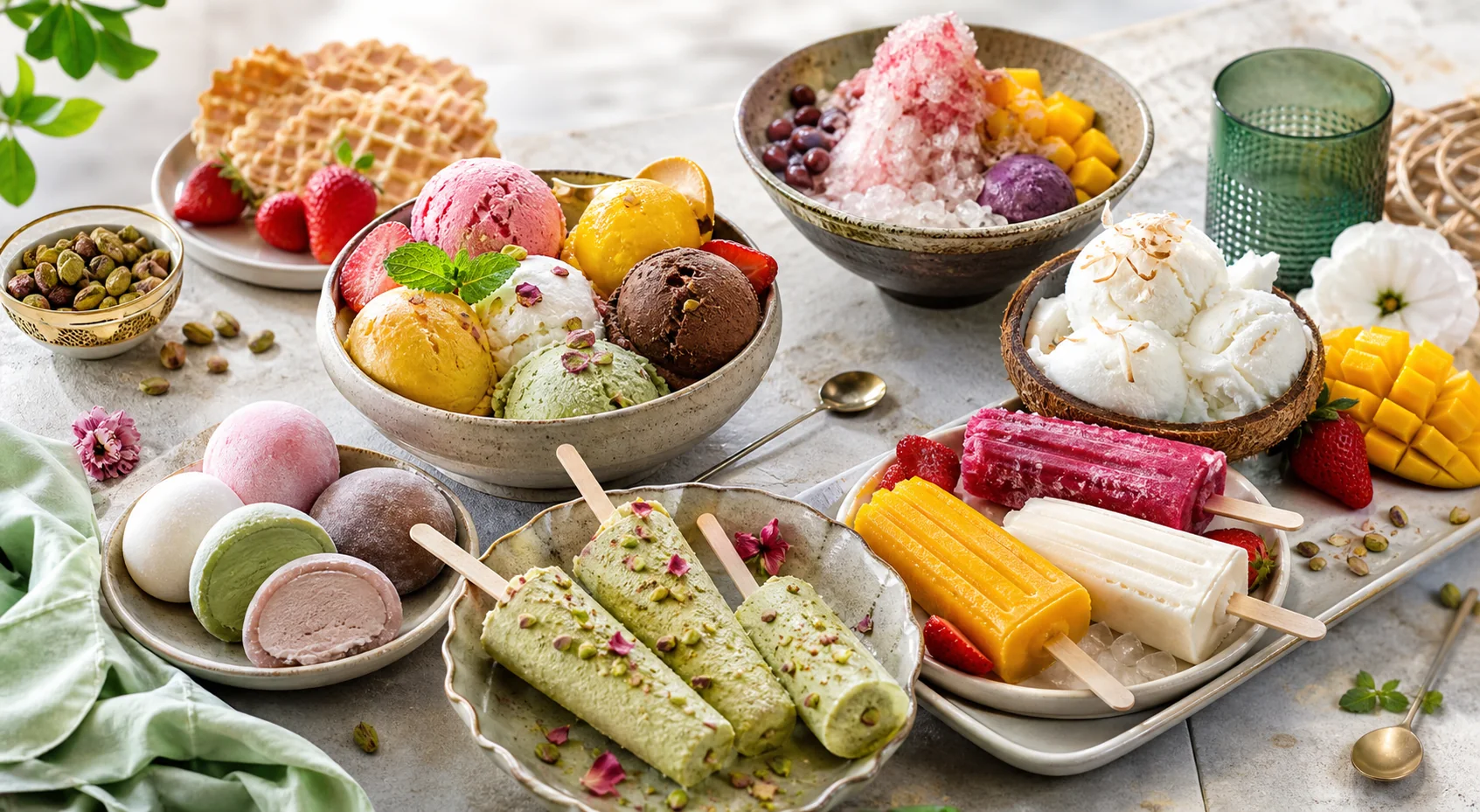
Visual tasting notes
Around-the-world ice cream is as much about appearance as flavor: glossy gelato, rounded mochi, pale kulfi, shaved ice crystals, coconut bowls, bright fruit, and crunchy toppings all tell you what kind of spoonful is coming.
Use this as a friendly guide, not a rigid border map. Food travels, families adapt recipes, shops borrow ideas, and modern menus remix traditions all the time. That is part of the fun.
Europe and the Mediterranean
Gelato is the superstar of Italian frozen desserts: smooth, dense, and often served a little softer than hard ice cream. Many gelaterias build their appeal around focused flavors such as pistachio, hazelnut, chocolate, lemon, stracciatella, coffee, and seasonal fruit.
Taste it for: intense flavor, creamy body, and a slower, more deliberate scoop.
Granita is icy, spoonable, and refreshing. Its texture can range from coarse crystals to a smoother slush, with lemon, almond, coffee, strawberry, and mulberry among the classic flavor directions.
French frozen dessert traditions are associated with elegant ice creams, fruit sorbets, and pastry-shop precision. Expect a strong connection to custard, cream, chocolate, fruit, nuts, and plated desserts.
This playful dessert presses vanilla ice cream through a tool so it looks like spaghetti, then tops it with strawberry sauce and white chocolate or coconut shavings. It is dessert theater with a wink.
Soft serve in a cone with a chocolate flake is a familiar British ice cream image. It is simple, nostalgic, and built for seaside walks, parks, and quick sunny-day treats.
In Greek dessert culture, mastic and orchid-root ingredients can create aromatic, elastic ice cream textures. It pairs naturally with syrupy pastries, nuts, and strong coffee.
South Asia
Kulfi is often denser than churned ice cream because it is traditionally made by slowly reducing milk before freezing it in molds. Classic flavor directions include pistachio, cardamom, saffron, rose, mango, malai, and almond.
Taste it for: concentrated dairy flavor, fragrant spices, and a satisfyingly firm bite.
This layered dessert can bring together kulfi, rose syrup, sweet basil seeds, vermicelli, milk, nuts, and sometimes jelly. It is part drink, part sundae, part textural adventure.
Regional dairy-rich ice creams can lean simple and fragrant, often spotlighting milk, cream, nuts, and traditional sweet-shop flavors rather than heavy mix-ins.
Modern ice cream menus sometimes borrow from local desserts, using coconut, jaggery, cardamom, nutmeg, cashew, and custard-like richness for warmly spiced frozen treats.
East and Southeast Asia
Japan is famous for matcha ice cream, mochi ice cream wrapped in chewy rice dough, and kakigori shaved ice dressed with syrup, condensed milk, fruit, or tea flavors. The best versions balance restraint with detail.
Taste it for: clean flavors, contrast, and textures that can be soft, chewy, icy, or creamy.
Halo-halo layers shaved ice, evaporated milk, beans, jellies, fruit, flan, and often a scoop of ube ice cream. Ube brings a vivid purple color and mellow, sweet, earthy flavor.
Thai coconut ice cream is often served in a coconut shell or cup with toppings such as peanuts, sweet corn, sticky rice, coconut meat, or jellies. It is creamy, cooling, and very street-snack friendly.
Taiwanese shaved ice desserts can be piled with mango, taro balls, red beans, grass jelly, condensed milk, peanuts, or brown sugar syrup. Snow ice is shaved into delicate ribbons for a fluffy, melt-away texture.
Bingsu is a shaved ice dessert often topped with red beans, condensed milk, fruit, rice cakes, cereal, or modern flavors such as chocolate, coffee, and matcha. It is made for sharing.
Ais kacang piles shaved ice with syrups, beans, jelly, corn, and other toppings. Ice cream potong brings a compact bar format, often in flavors like red bean, durian, coconut, or corn.
The Americas
Paletas are frozen pops that can be fruit-forward, creamy, spicy, tangy, or layered with chunks of real fruit. Nieves are water- or fruit-based frozen desserts that can feel bright, fresh, and intensely refreshing.
Taste it for: mango chile, tamarind, lime, strawberries and cream, coconut, watermelon, and fruit you can actually chew.
Argentina has a strong helado culture, with dulce de leche as a beloved centerpiece. The flavor can range from milky caramel to deeply cooked, almost toffee-like richness.
American ice cream culture includes hard scoops, soft serve, frozen custard, soda fountains, banana splits, brownie sundaes, ice cream sandwiches, novelty bars, and neighborhood trucks.
Canadian ice cream often celebrates local dairy, maple flavors, berry swirls, and small creameries. In many places, summer scoop shops become seasonal landmarks.
Lucuma is a golden fruit with a flavor often described as maple-like, caramel-like, or sweet potato-like. In ice cream, it becomes mellow, creamy, and deeply comforting.
This traditional style is made by stirring fruit mixture over ice in a wide metal pan. The result is often bright, fruity, and somewhere between sorbet and hand-crafted ice cream.
Middle East and Africa
Dondurma is known for its stretchy, chewy texture and famously theatrical serving style. Traditional versions use ingredients such as salep and mastic, helping create the pull and resistance that make it so distinctive.
Taste it for: elastic texture, slower melting, and the drama of a cone that may take a little playful negotiation to receive.
Bastani sonnati often features saffron, rosewater, pistachio, and frozen cream pieces. Faloodeh pairs thin starch noodles with a semi-frozen syrup, often brightened with lime or sour cherry.
Booza is a dense, stretchy ice cream style that can be pounded and folded for texture. Pistachio, rose, and milk-forward flavors are common points of reference.
Modern South African shops may fold in regional sweets, fruit, caramel, spices, or dessert inspirations. Expect the global ice cream vocabulary to meet local favorites and climate-friendly refreshment.
Frozen desserts may highlight mango, coconut, pineapple, ginger, peanuts, chocolate, and local fruit. In hotter regions, the line between drink, ice, pop, and scoop can be wonderfully fluid.
Ice creams and frozen desserts can echo the wider dessert table: almonds, pistachios, dates, citrus, honey, mint, and floral aromatics all make sense beside pastry and tea.
Texture compass
When people say "ice cream," they may mean a scoopable dairy dessert. But the wider world of frozen sweets includes ice crystals, ribbons of shaved milk, chewy rice dough, syrupy noodles, dense molded milk, fruit pops, and soft serve towers. Once you start looking for texture, the map gets much more interesting.
Flavor and texture cheat sheet
| If you like... | Try... | Why it works | Good first flavors |
|---|---|---|---|
| Classic creamy scoops | Gelato, helado, frozen custard | Familiar format with richer or denser texture. | Pistachio, chocolate, vanilla, dulce de leche, hazelnut |
| Fruit sorbet or popsicles | Paletas, nieves, granita, helado de paila | Bright fruit flavor and refreshing acidity. | Mango, lime, tamarind, strawberry, lemon, passion fruit |
| Tea, coffee, and subtle bitterness | Matcha ice cream, coffee granita, black sesame scoops | Bitterness keeps sweetness in check. | Matcha, hojicha, espresso, black sesame, milk tea |
| Caramel and cozy dessert flavors | Dulce de leche helado, lucuma ice cream, maple scoops | Cooked sugar notes feel warm even when frozen. | Dulce de leche, lucuma, maple walnut, toffee, brown sugar |
| Textures and toppings | Halo-halo, bingsu, ais kacang, falooda kulfi | Every spoonful changes: soft, icy, chewy, creamy, syrupy. | Ube, mango, red bean, coconut, rose, condensed milk |
| Something playful and theatrical | Dondurma, spaghettieis, mochi ice cream | The dessert is as much about interaction as flavor. | Pistachio, vanilla, strawberry, matcha, chocolate |
You do not need a freezer full of rare ingredients to make a fun global tasting board. Pick a few texture families, label them clearly, and let everyone compare what changes from spoon to spoon.
Try one creamy scoop, one fruit ice, one layered dessert, and one chewy or unusual texture. A focused lineup is easier to taste and remember.
Two or three bites per dessert keeps the tasting lively. Tiny cups, tasting spoons, and little labels make the table feel intentional.
Group flavors by creamy, fruity, nutty, floral, spiced, caramel, tea, and chocolate. People notice more when they have a vocabulary for it.
Set out toasted nuts, coconut, fruit, condensed milk, chocolate shavings, wafer cookies, or a fruit syrup. Keep the toppings small so they support the dessert instead of burying it.
Ask: Is it dense, airy, icy, chewy, syrupy, creamy, crunchy, or melty? "Favorite" is fun, but texture teaches you more.
A respectful scoop note
Global dessert guides should feel joyful without flattening whole cultures into a single flavor. Many desserts vary by region, family, neighborhood, shop, season, and personal taste. If you are writing a menu, planning content, or hosting a tasting, use specific names, avoid treating any ingredient as a novelty punchline, and remember that "traditional" and "modern" often sit happily in the same freezer case.
Frequently asked questions
Gelato is often served slightly warmer and made with a denser texture than many American-style hard ice creams. It can feel smoother and more flavor-forward. For a deeper comparison, see Ice Cream vs. Gelato vs. Frozen Custard.
Kulfi is a frozen dairy dessert, but it is often denser because it is traditionally made from reduced milk and frozen in molds instead of churned with lots of air.
Shaved ice is cooling, flexible, and easy to pair with fruit, syrup, beans, jellies, milk, tea, and crunchy toppings. It can be light and refreshing or built into a full dessert bowl.
Dulce de leche, pistachio gelato, mango paletas, matcha ice cream, coconut ice cream, and ube ice cream are friendly starting points because they are distinctive but not difficult to enjoy.
For many first-time tasters, dondurma or booza feels surprising because of the stretchy texture. Mochi ice cream is another approachable texture shift because the chewy wrapper contrasts with the creamy center.
Some are beginner-friendly, while others depend on special tools or ingredients. Paleta-style pops, granita, simple no-churn flavors, and tasting-board toppings are the easiest places to start.